Obesity as a Chronic Disease
Nearly 11 million Californians – almost one in three – are living with obesity. If nothing changes, it can surpass 40% by 2030. But this crisis is not impacting all communities equally.
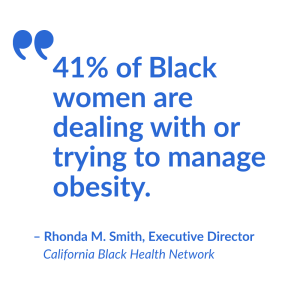
- In California, nearly 38% of all Black adults are overweight or obese, including 41% of Black women, a stark reminder of persistent health inequities that demand attention.That impact goes beyond individual health. A recent report by GlobalData revealed that obesity costs California $89.5 billion annually, placing a heavy burden on families, communities, and the healthcare system.
- Social determinants of health—factors like access to healthy food, safe places to exercise, and affordable healthcare—are key reasons why obesity disproportionately affects some communities.
- Black communities disproportionately live in what are known as “food deserts” or “medical deserts,” with limited access to nutritious food and health care services. Without proper, equitable treatment options, obesity can lead to more serious conditions, including type 2 diabetes, heart disease, hypertension, and even certain cancers.
- Addressing obesity means addressing equity. By investing in healthier environments and increasing access to care, we can begin to close these gaps and build stronger, healthier communities across California.
California’s Answer: Restore GLP-1 Coverage within Medi-Cal
As of January 1, 2026, policymakers gutted GLP-1 coverage from Medi-Cal and now expect low-income Californians to consider changing their diet, exercising, or pursuing counseling to treat obesity – a shortsighted, stigmatizing decision that denies basic healthcare to people who need it most.
- This decision stands in direct contrast to California’s stated commitment to health equity. While state guidance recognizes equity as a priority, many individuals who were previously prescribed weight-loss medications abruptly lost coverage at the start of the year, widening the gap between those who need treatment most and those can afford it. Effective treatment of obesity requires a multidisciplinary approach, involving healthcare providers, nutritionists, mental health professionals, behavioral health support, and the appropriate use of medications – like GLP-1s.
- In California, where Medi-Cal serves millions of residents, coverage policy decisions have statewide public health implications. Recognizing obesity as a chronic disease and restoring access to GLP1s are critical steps toward reducing preventable illnesses, such as cardiometabolic morbidity and mortality, and saving lives across California.